.jpg)
Saturday, March 20, 2010
An Image Worth Waiting For....
Savannah and I take AmyDog for a walk whenever we get a chance. Well for the past two weeks I've been wanting to take a picture of this one tree but have yet to get the right timing or weather. Today, I finally decided to make it happen regardless. Ideally I wanted to be one the other side of the tree, but there were people standing there and dogs playing around them so I had to walk to the other side. So this is sort of the reverse of what I planned on shooting, but I still enjoyed it!
.jpg)

Sunday, March 14, 2010
You can Experience God, I Want to Encounter Him!
While this is sort of tongue-in-cheek, I think this is a message that is skimmed over so much now because we hear it often. But I have been dealing with this issue with more scrutiny as I have been working on a music project that is for the church, yet can be kind of like a rock album at the same time. Am I encouraging a loss of encounter with God by overwhelming the the senses and creating a experience instead? Honestly, maybe only time and the correct congregation can determine that. But the broader picture has been illustrated to me more clearly through a very powerful passage from Isaiah.
Before I hit the passage though, I want to clarify what experience and encounter mean. Experience can be explained as passive, something that happens to you, many times, whether or not you want it to. It is always focused on the self or ego. It is my experience; going on a roller coaster is only an experience for me - the roller coaster does not experience anything and the person I'm sitting next to may have an experience but it is not related to me experience. However, an encounter is something or, more appropriately, someone who confronts you. An encounter demands a response from you, an interaction, a relation.
With that somewhat clear, let us move to Isaiah's commission:
Isaiah definitely had a unique experience. In the face of God's holiness and magnitude, Isaiah realized his failures and became humbled. However, I want to suggest that Isaiah's responsibility for his own failures is not his gravest concern. Will not even Satan eventually acknowledge his unrighteousness before God? But what Satan will never do is what Isaiah does in light of God's call: take on the responsibility he has to God and his neighbor. God did not confront Isaiah with condemnation, but with a request. The first part of this passage is merely an experience, albeit a phenomenal one! And Isaiah does, in light of such an experience, react, but is not communion with God more than reaction to His holiness? True communion is dialogue, confrontation, and an acknowledge responsibility to the other. And this is what we see in Isaiah ultimately. "Here I am..." literally means "Here I am for you" in the Hebrew. At this moment Isaiah learns to look beyond himself and see the true responsibility he must take on.
So you can experience God and not be worse for it. But I desire an encounter with Him; when mere presence becomes relation, and a confrontation to become more to my God and my neighbor than I am at this moment. That is the true life before God.
Before I hit the passage though, I want to clarify what experience and encounter mean. Experience can be explained as passive, something that happens to you, many times, whether or not you want it to. It is always focused on the self or ego. It is my experience; going on a roller coaster is only an experience for me - the roller coaster does not experience anything and the person I'm sitting next to may have an experience but it is not related to me experience. However, an encounter is something or, more appropriately, someone who confronts you. An encounter demands a response from you, an interaction, a relation.
With that somewhat clear, let us move to Isaiah's commission:
In the year that King Uzziah died, I saw the Lord seated on a throne, high and exalted, and the train of his robe filled the temple. Above him were seraphs, each with six wings: With two wings they covered their faces, with two they covered their feet, and with two they were flying. And they were calling to one another:
"Holy, holy, holy is the LORD Almighty;
the whole earth is full of his glory."
At the sound of their voices the doorposts and thresholds shook and the temple was filled with smoke.
"Woe to me!" I cried. "I am ruined! For I am a man of unclean lips, and I live among a people of unclean lips, and my eyes have seen the King, the LORD Almighty."
Then one of the seraphs flew to me with a live coal in his hand, which he had taken with tongs from the altar. With it he touched my mouth and said, "See, this has touched your lips; your guilt is taken away and your sin atoned for."
Then I heard the voice of the Lord saying, "Whom shall I send? And who will go for us?"
And I said, "Here am I. Send me!"
Isaiah 6:1-8
Isaiah definitely had a unique experience. In the face of God's holiness and magnitude, Isaiah realized his failures and became humbled. However, I want to suggest that Isaiah's responsibility for his own failures is not his gravest concern. Will not even Satan eventually acknowledge his unrighteousness before God? But what Satan will never do is what Isaiah does in light of God's call: take on the responsibility he has to God and his neighbor. God did not confront Isaiah with condemnation, but with a request. The first part of this passage is merely an experience, albeit a phenomenal one! And Isaiah does, in light of such an experience, react, but is not communion with God more than reaction to His holiness? True communion is dialogue, confrontation, and an acknowledge responsibility to the other. And this is what we see in Isaiah ultimately. "Here I am..." literally means "Here I am for you" in the Hebrew. At this moment Isaiah learns to look beyond himself and see the true responsibility he must take on.
So you can experience God and not be worse for it. But I desire an encounter with Him; when mere presence becomes relation, and a confrontation to become more to my God and my neighbor than I am at this moment. That is the true life before God.
Wednesday, March 03, 2010
The Two Great Commandments and What They Mean For Our Lives
Hearing that Jesus had silenced the Sadducees, the Pharisees got together. One of them, an expert in the law, tested him with this question:
"Teacher, which is the greatest commandment in the Law?" Jesus replied: " 'Love the Lord your God with all your heart and with all your soul and with all your mind.' This is the first and greatest commandment. And the second is like it: 'Love your neighbor as yourself.' All the Law and the Prophets hang on these two commandments."
Jesus was asked to give one commandment, and he gave two. There is a link, but what is he trying to say to us?
Let us discuss; this is something I've been thinking a lot about lately and could use some more thoughts.
Wednesday, November 04, 2009
Postmodernism and Religion
DISCLAIMER: This post is not an attempt to make religion and postmodernism compatible, but it is merely to show that the postmodern culture may be a positive thing for religion instead of a threat. Also I am saying "religion" to mean a system of beliefs and practices and not referring to a religious person - so think "Christianity" when I say religion and not your personal existence.
This post is stemming from a presentation I did in a class on postmodernism in grad school. I'm not an expert in this area of postmodernism but I have had over two months or about 30 hours of teaching under a postmodernist professor in a very small class. I say this just so I can have an ounce credibility walking forward.
In addressing religion in light of postmodernism, you have to understand that postmodernism is a critique of modernism. In short, while the Enlightenment was based on the rational search for truth and certainty, the moral progress of humanity, and the belief in a grand narrative account of reality (all of reality can fit under and be explained by a single system of beliefs), postmodernism rejects all of this (Borrowed from Pamela Sue Anderson in The Routledge Companion to Postmodernism pg. 45). So Postmodernism, as defined by a postmodernist herself, is the rejection of a grand narrative, moral progress, and certainty through rationality or any other means. In its place you have moral relativism, uncertainty, and no system of beliefs that can explain the world. As you can imagine this is exactly opposite of religion as well.
THis should show that I am not trying to find compatibility in which these two ideas - postmodernism and religion - can meld into one. I am want to show, however, that postmodernism, as a idea living side-by-side with religion in the same culture, can be positive for religion.
First of all, postmodernism's rejection of the Enlightenment ideal of reason and scientific method is much needed. Modernism sucked the life or soul out of the human being by making him/her a subject to speculative thought and scientific method. Moreover, the battle religion has been fighting for centuries is starting to ease up - it is no longer having to give strict, reasonable, and scientific justifications. This is not saying that religion cannot do so, but religion is much more than this by definition. Religion wants the whole human being, the Enlightenment just wanted the body and intellect. Postmodernism is ushering in a time where this game does not have to be played anymore by religion. Postmodernism can move this dialogue to a more constructive level.
You can argue that postmodernism sucks the life out of the soul as well, and I would agree. What is left is a descriptive idea of the human being based on title, occupation, race, gender, and so on. Postmodernism's skepticism of metaphysics brings human being to the surface and leaves the soul to suffocate.
However, this is under the assumption that postmodernism can effect religion at this level - I do not think it can without at one point destroying the very nature of religion and at the other side destroying its very nature of relativism. As you will see throughout this, postmodernism's relativism and disgust for imperialism (culturally or personally) does not allow itself to take over and make absolute statements. It is forever bound by its own rules and will self-destruct if it goes outside of them.
Secondly, postmodernism's can bridge the gap between religions by creating an atmosphere in the culture that requires it. Postmodernists hate religious wars and hostility. It's moral relativism requires that people respect one another, and this can create an atmosphere that is needed between religions. If you want to label it as tolerance you can but I want to stay away from that term because of its heavy stigma. Postmodernism believes in a culture, and really any idea, being in its pure form, and this is why you see a lot of them saying that they want Christians to be like Jesus and not like Christians. It's call for authenticity and respect can be a catalyst for change if it is widely held in the culture. We have already seen how Derrida's deconstruction of language has helped the study of the Scriptures by forcing us to look at it within the context.
I can say more, but I will leave it at here for now. All in all, religion and postmodernism are not compatible, but the influence they can have on each other can still be a positive thing. Am I saying that postmodernism should be held as a belief? No, it is untenable by its very nature. Religion will always have to fight its moral relativism, lack of certainty, and its disbelief in grand narratives. This whole post presupposes two things that I think can be presupposed.
Firstly, postmodernism cannot eradicate religion without it eradicating itself. Its moral and truth relativism will not allow it to make overarching judgements no matter how much a postmodernist wants to make a certain stance. I did this with my professor as he started talking about religious wars being horrible. After about a minute of conversation, he admitted that he cannot make that disgust a universal catalyst for changing it because, for him, all truth and morality is relative to the individual (which in and of itself is a universal stance). Postmodernism cannot maintain itself as a replacement for anything else and is therefore no real threat to any established idea. Modernism is still around, it has just been diminished. Religion is still around has actually flourished, I think in part of postmodernism's disenchantment with reason and science. Postmodernism will critique anything, but replace nothing.
Secondly, I am presupposing that we can operate and take truths from postmodernism without adopting it. While a Christian does not believe in relativism as a postmodernist does, he can still see the need for respect and authenticity through it. And even though a Christian does not believe where postmodernism has taken the human being, he can agree that modernism had it wrong and enjoy the looser chains. The postmodernist is open, and willing to listen and change. I would trade modernity for that culture any day of the week as a Christian and human being.
I hope this all makes sense, and I am not being disappointing. If you are looking for a duke-out between the two or a system that tries to meld the two, then you should be disappointed. My claim is only that postmodernism can be a positive thing for religion, and shouldn't be seen as such a threat to it. Individuals are still definitely threatened, but I think theology and beliefs are safe (although they may be tweaked some).
This post is stemming from a presentation I did in a class on postmodernism in grad school. I'm not an expert in this area of postmodernism but I have had over two months or about 30 hours of teaching under a postmodernist professor in a very small class. I say this just so I can have an ounce credibility walking forward.
In addressing religion in light of postmodernism, you have to understand that postmodernism is a critique of modernism. In short, while the Enlightenment was based on the rational search for truth and certainty, the moral progress of humanity, and the belief in a grand narrative account of reality (all of reality can fit under and be explained by a single system of beliefs), postmodernism rejects all of this (Borrowed from Pamela Sue Anderson in The Routledge Companion to Postmodernism pg. 45). So Postmodernism, as defined by a postmodernist herself, is the rejection of a grand narrative, moral progress, and certainty through rationality or any other means. In its place you have moral relativism, uncertainty, and no system of beliefs that can explain the world. As you can imagine this is exactly opposite of religion as well.
THis should show that I am not trying to find compatibility in which these two ideas - postmodernism and religion - can meld into one. I am want to show, however, that postmodernism, as a idea living side-by-side with religion in the same culture, can be positive for religion.
First of all, postmodernism's rejection of the Enlightenment ideal of reason and scientific method is much needed. Modernism sucked the life or soul out of the human being by making him/her a subject to speculative thought and scientific method. Moreover, the battle religion has been fighting for centuries is starting to ease up - it is no longer having to give strict, reasonable, and scientific justifications. This is not saying that religion cannot do so, but religion is much more than this by definition. Religion wants the whole human being, the Enlightenment just wanted the body and intellect. Postmodernism is ushering in a time where this game does not have to be played anymore by religion. Postmodernism can move this dialogue to a more constructive level.
You can argue that postmodernism sucks the life out of the soul as well, and I would agree. What is left is a descriptive idea of the human being based on title, occupation, race, gender, and so on. Postmodernism's skepticism of metaphysics brings human being to the surface and leaves the soul to suffocate.
However, this is under the assumption that postmodernism can effect religion at this level - I do not think it can without at one point destroying the very nature of religion and at the other side destroying its very nature of relativism. As you will see throughout this, postmodernism's relativism and disgust for imperialism (culturally or personally) does not allow itself to take over and make absolute statements. It is forever bound by its own rules and will self-destruct if it goes outside of them.
Secondly, postmodernism's can bridge the gap between religions by creating an atmosphere in the culture that requires it. Postmodernists hate religious wars and hostility. It's moral relativism requires that people respect one another, and this can create an atmosphere that is needed between religions. If you want to label it as tolerance you can but I want to stay away from that term because of its heavy stigma. Postmodernism believes in a culture, and really any idea, being in its pure form, and this is why you see a lot of them saying that they want Christians to be like Jesus and not like Christians. It's call for authenticity and respect can be a catalyst for change if it is widely held in the culture. We have already seen how Derrida's deconstruction of language has helped the study of the Scriptures by forcing us to look at it within the context.
I can say more, but I will leave it at here for now. All in all, religion and postmodernism are not compatible, but the influence they can have on each other can still be a positive thing. Am I saying that postmodernism should be held as a belief? No, it is untenable by its very nature. Religion will always have to fight its moral relativism, lack of certainty, and its disbelief in grand narratives. This whole post presupposes two things that I think can be presupposed.
Firstly, postmodernism cannot eradicate religion without it eradicating itself. Its moral and truth relativism will not allow it to make overarching judgements no matter how much a postmodernist wants to make a certain stance. I did this with my professor as he started talking about religious wars being horrible. After about a minute of conversation, he admitted that he cannot make that disgust a universal catalyst for changing it because, for him, all truth and morality is relative to the individual (which in and of itself is a universal stance). Postmodernism cannot maintain itself as a replacement for anything else and is therefore no real threat to any established idea. Modernism is still around, it has just been diminished. Religion is still around has actually flourished, I think in part of postmodernism's disenchantment with reason and science. Postmodernism will critique anything, but replace nothing.
Secondly, I am presupposing that we can operate and take truths from postmodernism without adopting it. While a Christian does not believe in relativism as a postmodernist does, he can still see the need for respect and authenticity through it. And even though a Christian does not believe where postmodernism has taken the human being, he can agree that modernism had it wrong and enjoy the looser chains. The postmodernist is open, and willing to listen and change. I would trade modernity for that culture any day of the week as a Christian and human being.
I hope this all makes sense, and I am not being disappointing. If you are looking for a duke-out between the two or a system that tries to meld the two, then you should be disappointed. My claim is only that postmodernism can be a positive thing for religion, and shouldn't be seen as such a threat to it. Individuals are still definitely threatened, but I think theology and beliefs are safe (although they may be tweaked some).
Friday, October 16, 2009
No More Clouds!
The sun came out for just a few seconds today after a whole week of just clouds and rain. Memphis weather is getting depressing, but this made me happy and I ran out to take some photographs! Here's my favorite:
BLOG.jpg)
BLOG.jpg)
Friday, October 02, 2009
Church Losing Significance in US?
In history, the church has flourished in troubling times. I remember the Sunday after September 11th when my church's seats were filled to the brink. People looked to my pastor, a prominent figure in the religious world, for answers, meaning, and purpose.
But what about consistently troubled times? This article in USA Today few days ago made me step back and look at what the church is life nowadays. Churches are losing in this economic battle like anyone else; the troubled times are not turning into religious times anymore.
Sure, less money in laity means less tithing, but still this points to something deeper - something Peter Berger saw fifty years ago. Berger said that as society becomes more pluralistic religion changes. Religion is no longer the answer for troubled times: it is only one of the answers. In response, churches have to change, they have to sell what they offer. They are no concerned more with the peoples desires, and the relationship is no dialectical. Not only does the church impose itself on the people but the people now equally impose what they think on the church The result is the church taking the people's wishes into account and turning the religion in to a commodity to sell to the public.
Obviously, this is an extreme take, but I do not think it is too far off. Churches offer coffee bars, wii's, contemporary services, and so on to bring in people. They are hooks to get people in. While the goal is not to make money off of people, but to change people's lives does not change the fact that the means to do so are strikingly similar. This is why people say churches need to stop getting their tips from the people - I agree.
There is a deeper concern though. Why is the church no longer the place to go to during troubling times? Half of the problem is because they are seen as institutions and businesses more than a group of people who care and offer true meaning to such circumstances. But it is also something else.
Why is the church no longer considered a refuge for the troubled?
But what about consistently troubled times? This article in USA Today few days ago made me step back and look at what the church is life nowadays. Churches are losing in this economic battle like anyone else; the troubled times are not turning into religious times anymore.
Sure, less money in laity means less tithing, but still this points to something deeper - something Peter Berger saw fifty years ago. Berger said that as society becomes more pluralistic religion changes. Religion is no longer the answer for troubled times: it is only one of the answers. In response, churches have to change, they have to sell what they offer. They are no concerned more with the peoples desires, and the relationship is no dialectical. Not only does the church impose itself on the people but the people now equally impose what they think on the church The result is the church taking the people's wishes into account and turning the religion in to a commodity to sell to the public.
Obviously, this is an extreme take, but I do not think it is too far off. Churches offer coffee bars, wii's, contemporary services, and so on to bring in people. They are hooks to get people in. While the goal is not to make money off of people, but to change people's lives does not change the fact that the means to do so are strikingly similar. This is why people say churches need to stop getting their tips from the people - I agree.
There is a deeper concern though. Why is the church no longer the place to go to during troubling times? Half of the problem is because they are seen as institutions and businesses more than a group of people who care and offer true meaning to such circumstances. But it is also something else.
Why is the church no longer considered a refuge for the troubled?
Friday, September 04, 2009
Wrestling with (the) Word(s): Trees and Gardens
It could be said that modern propaganda and advertising was started in WWII by the Nazi's. They were the first ones in the modern era to really utilize media, public ignorance, and constant bombardment to create a perfect storm for lies to become truth. They created a bubble, painted a picture, and gave the German people only one view of the world. The result was a morally ignorant and blinded society. They were convincing, subtle, and very effective.
What really happened in Germany was morality became a blur - good and evil became something that was hard to distinguish. This phenomenon is not new however. This happened at the beginning of humanity and continues on today.
All of us who went to sunday school or vacation Bible school as a kid know the story of Creation. God made everything and called it good. When He breathed life into man He called it very good, and when He saw man alone He said, "It is not good for man to be alone." Therefore, woman was made as companion. In all of this greatness, the very epicenter was the Garden of Eden. Man and woman cultivated and was responsible for all of this. One of their most important and peculiar responsibilities was to not touch or eat from the tree at the center of the garden - the Tree of the Knowledge of Good and Evil.
And this is odd..jpg) Ever since I was a kid I thought this tree was a weird, magical tree that had power to transfer the knowledge of good and evil. In my past few years on the college level, I have heard many question and confusing answers on this subject. One particular answer to the "Why?" question that has always bothered me is that God had to have something to test man and woman - the tree's purpose and God's command to not eat from it is to test man and give him the option of sinning. This is very confusing since we no longer need a tree to sin. There were plenty of things man and woman had a choice in without the tree to sin against: to lie to each other, to lie to God, to get angry in an argument, etc. But God put this tree in the garden for Adam and Eve to have the option to choose not to love God? This is far fetched to me.
Ever since I was a kid I thought this tree was a weird, magical tree that had power to transfer the knowledge of good and evil. In my past few years on the college level, I have heard many question and confusing answers on this subject. One particular answer to the "Why?" question that has always bothered me is that God had to have something to test man and woman - the tree's purpose and God's command to not eat from it is to test man and give him the option of sinning. This is very confusing since we no longer need a tree to sin. There were plenty of things man and woman had a choice in without the tree to sin against: to lie to each other, to lie to God, to get angry in an argument, etc. But God put this tree in the garden for Adam and Eve to have the option to choose not to love God? This is far fetched to me.
So what is the tree? What does it mean to have a knowledge of good and evil? What's so bad about knowing the difference?
This is exactly what God was trying to keep - the distinction between good and evil. The word knowledge in Hebrew is "da'at", which means to join together. This is the same word that the Bible uses when it says, "And Adam knew Eve," to connotate sexual intercourse. The word means much more than acquiring a new fact. With this in mind, we can see real danger of this tree. To make a literal translation it would say: "The Tree of the Joining of Good and Evil." The danger was not to know what evil and good is; the danger was to no longer no the difference.
So why the command not to eat from it? I do not believe the first sin had to be to eat from it. However, I find it completely natural that such a significant symbol has such a command to come with it. It was not the only command given to man to break. He was also commanded to cultivate the earth and to make a family. The command is not odd or unique in and of itself IF you understand the meaning of the tree itself.
What may give us more insight to the meaning of this story and commandment is to look at our lives now. What "trees" are we eating from in our lives to join good and evil into a blur?
Something to ask yourself as you get a chance to reflect on your day today.
What really happened in Germany was morality became a blur - good and evil became something that was hard to distinguish. This phenomenon is not new however. This happened at the beginning of humanity and continues on today.
All of us who went to sunday school or vacation Bible school as a kid know the story of Creation. God made everything and called it good. When He breathed life into man He called it very good, and when He saw man alone He said, "It is not good for man to be alone." Therefore, woman was made as companion. In all of this greatness, the very epicenter was the Garden of Eden. Man and woman cultivated and was responsible for all of this. One of their most important and peculiar responsibilities was to not touch or eat from the tree at the center of the garden - the Tree of the Knowledge of Good and Evil.
And this is odd.
.jpg) Ever since I was a kid I thought this tree was a weird, magical tree that had power to transfer the knowledge of good and evil. In my past few years on the college level, I have heard many question and confusing answers on this subject. One particular answer to the "Why?" question that has always bothered me is that God had to have something to test man and woman - the tree's purpose and God's command to not eat from it is to test man and give him the option of sinning. This is very confusing since we no longer need a tree to sin. There were plenty of things man and woman had a choice in without the tree to sin against: to lie to each other, to lie to God, to get angry in an argument, etc. But God put this tree in the garden for Adam and Eve to have the option to choose not to love God? This is far fetched to me.
Ever since I was a kid I thought this tree was a weird, magical tree that had power to transfer the knowledge of good and evil. In my past few years on the college level, I have heard many question and confusing answers on this subject. One particular answer to the "Why?" question that has always bothered me is that God had to have something to test man and woman - the tree's purpose and God's command to not eat from it is to test man and give him the option of sinning. This is very confusing since we no longer need a tree to sin. There were plenty of things man and woman had a choice in without the tree to sin against: to lie to each other, to lie to God, to get angry in an argument, etc. But God put this tree in the garden for Adam and Eve to have the option to choose not to love God? This is far fetched to me.So what is the tree? What does it mean to have a knowledge of good and evil? What's so bad about knowing the difference?
This is exactly what God was trying to keep - the distinction between good and evil. The word knowledge in Hebrew is "da'at", which means to join together. This is the same word that the Bible uses when it says, "And Adam knew Eve," to connotate sexual intercourse. The word means much more than acquiring a new fact. With this in mind, we can see real danger of this tree. To make a literal translation it would say: "The Tree of the Joining of Good and Evil." The danger was not to know what evil and good is; the danger was to no longer no the difference.
So why the command not to eat from it? I do not believe the first sin had to be to eat from it. However, I find it completely natural that such a significant symbol has such a command to come with it. It was not the only command given to man to break. He was also commanded to cultivate the earth and to make a family. The command is not odd or unique in and of itself IF you understand the meaning of the tree itself.
What may give us more insight to the meaning of this story and commandment is to look at our lives now. What "trees" are we eating from in our lives to join good and evil into a blur?
Something to ask yourself as you get a chance to reflect on your day today.
Tuesday, September 01, 2009
Commandments and Relation
Growing up in the west you hear about religious commandments. We have the Ten Commandments, the Great Commandments, and even Jesus saying, "A new commandment I give unto you..." on top of numerous commandments He quoted and loved. Jesus loved the commandments, as He should if He was the one giving them to man.
Yet Evangelicalism seems to have a love/hate relationship with Commandments. At one instant we claim that Christianity is not a religion but a relationship: "We don't need religion and its laws that make us work to become good; we need God and His Son." While this is true to an extent, we turn around to many "other" communities - like homosexuals and those who have abortions to name a couple - and blast them with commandments instead of God's Son:"Thou shalt not murder." It's a game many of us don't realize we are playing, and it is slowly becoming a deadly game for Evangelicals.
Why are we afraid of commandments as a way to approach God relationally? Why are we afraid of relationships when we approach others who are unrighteous?
The Hebrew word for commandment is mitzvah. The root word of mitzvah is tzavta, which means "connection." What this tells us is that God did not give commandments in order to be legalistic, demanding, and ritualistic. On the contrary, God gave commandments as a way to connect to Him. Commandments are the way we connect to God, not the way we appease or become right with God. We become righteous by connecting with God. The commandments were given in order to guide is in the way we ought to go - the way we were created to go. We were created to be in relation with God, but we fail to do so every time we deny the way He created us. Therefore, the commandments are the vessel by which we reconnect with God. This is why the commandments have not become obsolete for the Christian. Because the commandments were never meant to engender righteousness; they are merely there to display the way by which we become righteous - through our relation with God.
Any thoughts, concerns, or disagreement? This is just fresh thoughts that could be dead wrong, but are brought about by understanding what "commandment" really means.

Yet Evangelicalism seems to have a love/hate relationship with Commandments. At one instant we claim that Christianity is not a religion but a relationship: "We don't need religion and its laws that make us work to become good; we need God and His Son." While this is true to an extent, we turn around to many "other" communities - like homosexuals and those who have abortions to name a couple - and blast them with commandments instead of God's Son:"Thou shalt not murder." It's a game many of us don't realize we are playing, and it is slowly becoming a deadly game for Evangelicals.
Why are we afraid of commandments as a way to approach God relationally? Why are we afraid of relationships when we approach others who are unrighteous?
The Hebrew word for commandment is mitzvah. The root word of mitzvah is tzavta, which means "connection." What this tells us is that God did not give commandments in order to be legalistic, demanding, and ritualistic. On the contrary, God gave commandments as a way to connect to Him. Commandments are the way we connect to God, not the way we appease or become right with God. We become righteous by connecting with God. The commandments were given in order to guide is in the way we ought to go - the way we were created to go. We were created to be in relation with God, but we fail to do so every time we deny the way He created us. Therefore, the commandments are the vessel by which we reconnect with God. This is why the commandments have not become obsolete for the Christian. Because the commandments were never meant to engender righteousness; they are merely there to display the way by which we become righteous - through our relation with God.
Any thoughts, concerns, or disagreement? This is just fresh thoughts that could be dead wrong, but are brought about by understanding what "commandment" really means.
Saturday, August 22, 2009
.jpg)
(blog).jpg)


Wednesday, July 29, 2009
Why is Truth so Elusive?
Throughout my late high school years, my college years, and even today I hear about a crisis of truth in America. This is mainly an evangelical cry in response to moral subjectivism, postmodernism, and scientific ambiguity. Books upon books have been released such as "True Truth", "The Truth War", "Total Truth", and countless ones on postmodernism to fight the loss of truth in America. Now these scholars mean that absolute truth - something that is reflective of reality whether or not you think so - is slowly becoming instinct because of relativism. Truth, for these people, is the battle ground.
And they have been losing. Our culture has not become wiser about truth, nor has it really cared about these scholar's arguments. Such studies as "The Truth Project" have only helped Christians feel more secure in their faith. This is not bad, but it is not helping the "truth crisis". People more than ever are choosing their own truths, and even in the church this mindset is taking hold. Why is this so?
Jesus gave us the most useful information about this "crisis" and we have let it slip. We have possibly been too calloused by our own scholars on the subject to really take a fresh look at Jesus' words on truth. I believe Jesus would say to us what he said to his disciples years ago:
"To the Jews who had believed him, Jesus said, 'If you hold to my teaching, you are really my disciples. Then you will know the truth, and the truth will set you free.'" - John 8:31-32
You see we have taken these verses to mean: "We must tell people the truth; we must fight for truth so that people can be saved and go to heaven." Let me open up our assumptions and point to something that Jesus may be wanting us to get from this.
Why say, "and the truth will set you free?" I think Jesus said this because freedom is an intrinsic desire for human beings. We are in bondage to sin, and we want freedom - or, better yet, we are in bondage to lies, and we want freedom. We want moral freedom, social freedom, and personal freedom. The word that commonly debunks absolute truth nowadays is autonomy.
We find ourselves in a truth crisis because people are searching for freedom. They are searching for freedom from sin by making sin virtuous. They are searching for freedom from oppressive religion by making that the evil. We search for truth in our lives to find freedom. I have seen this in my life constantly. People changed their views to be freed, not to be in truth.
The less we offer the truths of the Gospel for the sake of living in truth and the more we offer the truths of the Gospel for the sake of living in freedom, the more we will find the Gospel being a liberating force in our culture. There is no truth crisis, I believe, because that is not the real problem. The problem is that people want to be freed and look anywhere to get it. Our goal is to offer true freedom.
And they have been losing. Our culture has not become wiser about truth, nor has it really cared about these scholar's arguments. Such studies as "The Truth Project" have only helped Christians feel more secure in their faith. This is not bad, but it is not helping the "truth crisis". People more than ever are choosing their own truths, and even in the church this mindset is taking hold. Why is this so?
Jesus gave us the most useful information about this "crisis" and we have let it slip. We have possibly been too calloused by our own scholars on the subject to really take a fresh look at Jesus' words on truth. I believe Jesus would say to us what he said to his disciples years ago:
"To the Jews who had believed him, Jesus said, 'If you hold to my teaching, you are really my disciples. Then you will know the truth, and the truth will set you free.'" - John 8:31-32
You see we have taken these verses to mean: "We must tell people the truth; we must fight for truth so that people can be saved and go to heaven." Let me open up our assumptions and point to something that Jesus may be wanting us to get from this.
Why say, "and the truth will set you free?" I think Jesus said this because freedom is an intrinsic desire for human beings. We are in bondage to sin, and we want freedom - or, better yet, we are in bondage to lies, and we want freedom. We want moral freedom, social freedom, and personal freedom. The word that commonly debunks absolute truth nowadays is autonomy.
We find ourselves in a truth crisis because people are searching for freedom. They are searching for freedom from sin by making sin virtuous. They are searching for freedom from oppressive religion by making that the evil. We search for truth in our lives to find freedom. I have seen this in my life constantly. People changed their views to be freed, not to be in truth.
The less we offer the truths of the Gospel for the sake of living in truth and the more we offer the truths of the Gospel for the sake of living in freedom, the more we will find the Gospel being a liberating force in our culture. There is no truth crisis, I believe, because that is not the real problem. The problem is that people want to be freed and look anywhere to get it. Our goal is to offer true freedom.
Tuesday, July 28, 2009
Day 1 - Drums and Bass
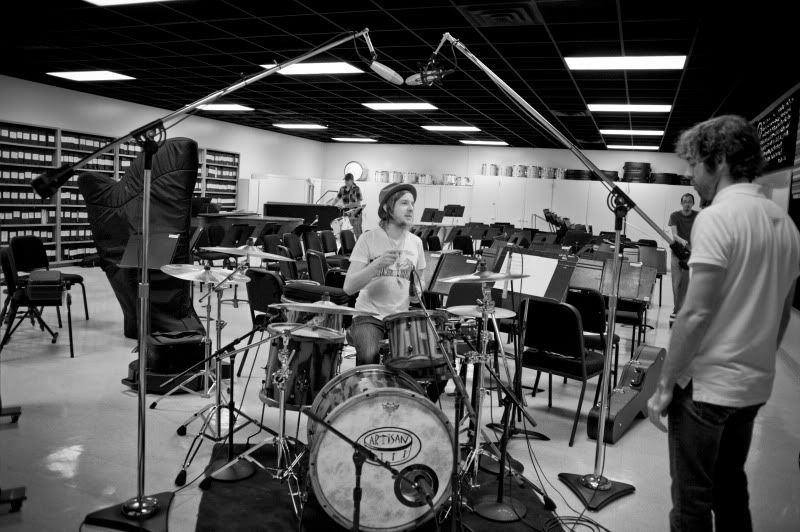
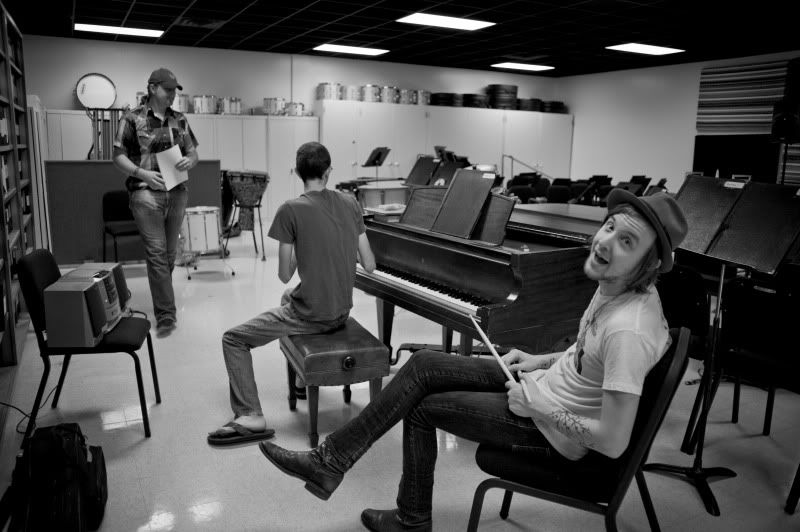
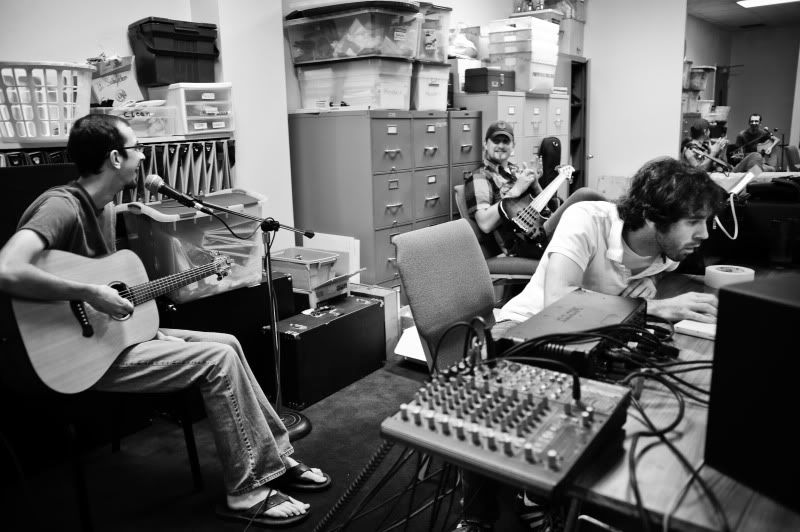
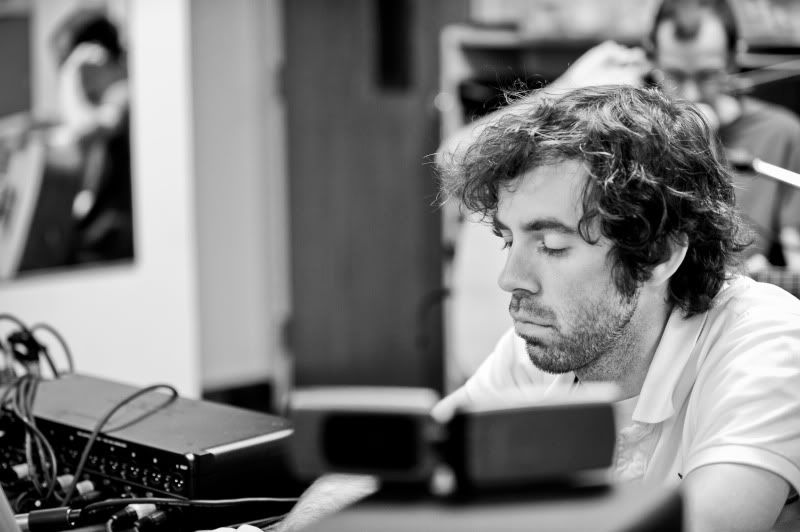
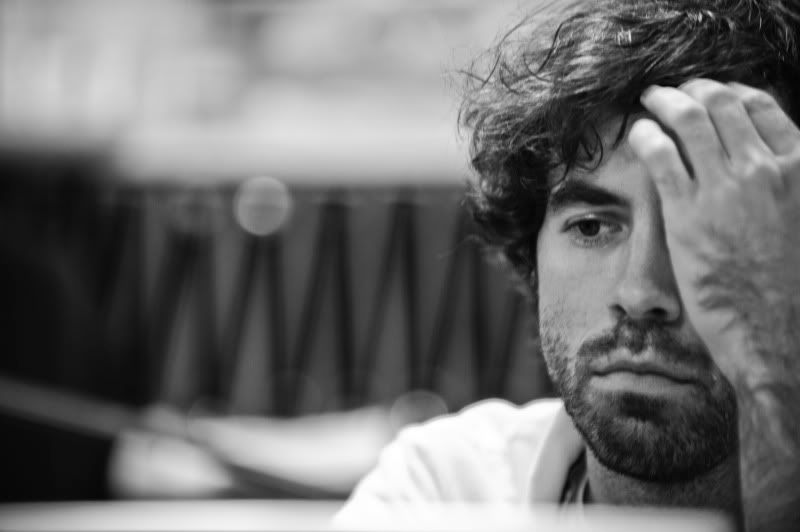
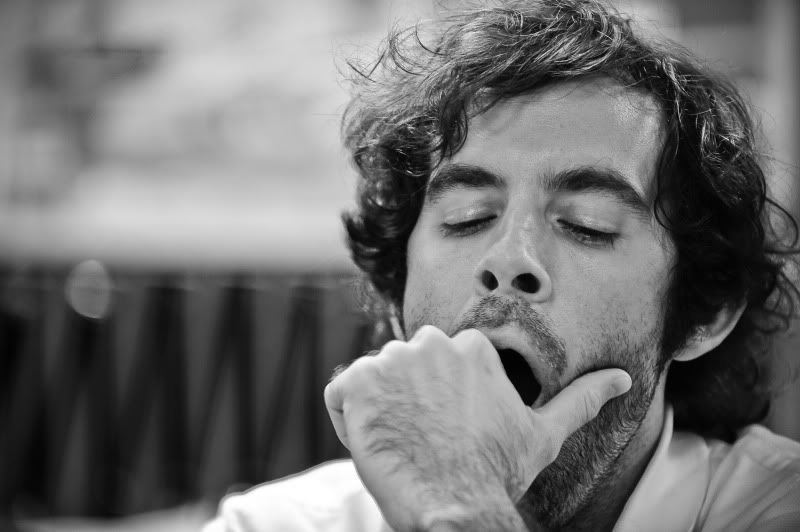
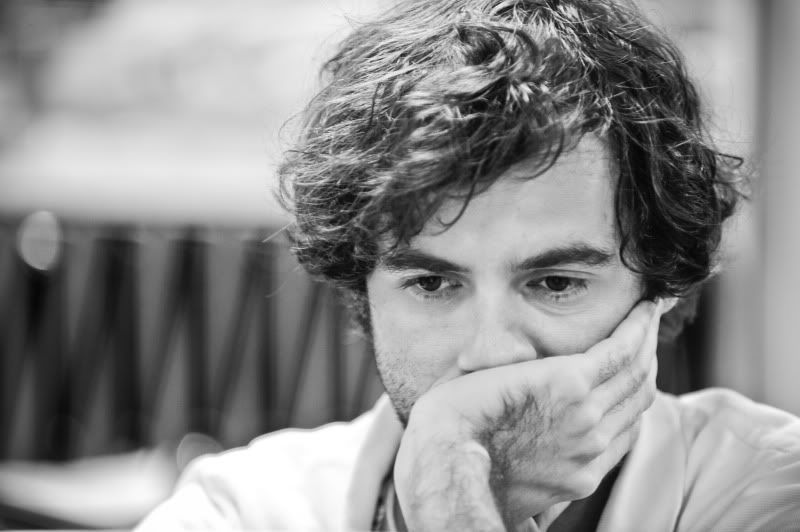
Mike Jackson (drums), Derek Shipley (bass), Ben Cole (tech genius), Savannah (faithful, beautiful wife), and myself decided to record late into the night. It was 3 o'clock before Savannah and I pulled into our driveway, but it was quite worth it. In one night we recorded bass and drums for all 6 songs going on this EP. From the rock, U2 inspired title track, "Redemption Has Come" to the smooth, and easy going "Eternal Spring," everyone felt good with our performances and bad about our poor judgement of an all-nighter.
This night was meaningful to me because it was the beginning of something I've been wanting to do for a long while. I have been wanting to record music; music that matters beyond me. This means its not about me anymore. It is about an idea, or vision, or value now. This isn't a grand adventure, but it is a communal one. I'm inviting others in because it is for others. This project is for the church - not my ego. This does not make this endeavor holier than any artists work. It makes it different and communal but not better. I hope I make this clear; I remind myself constantly of this.
Special thanks to Mike, Derek, Ben, and Savannah for all staying up, having fun with me, and helping a vision become a reality! Also to Curt Sines, from Artisan Drumworks, who let us record with his 10th Anniversary set made out of a rare Brazilian wood affectionately called "Tiger Wood". The set sounded wonderful!
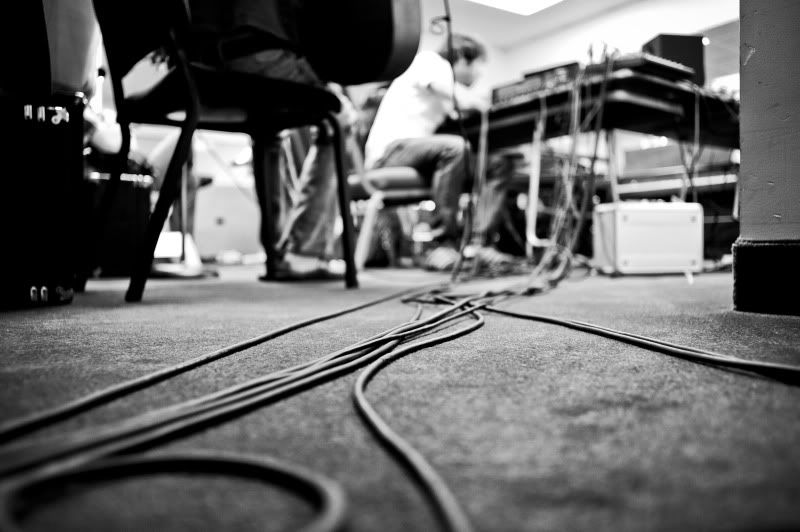
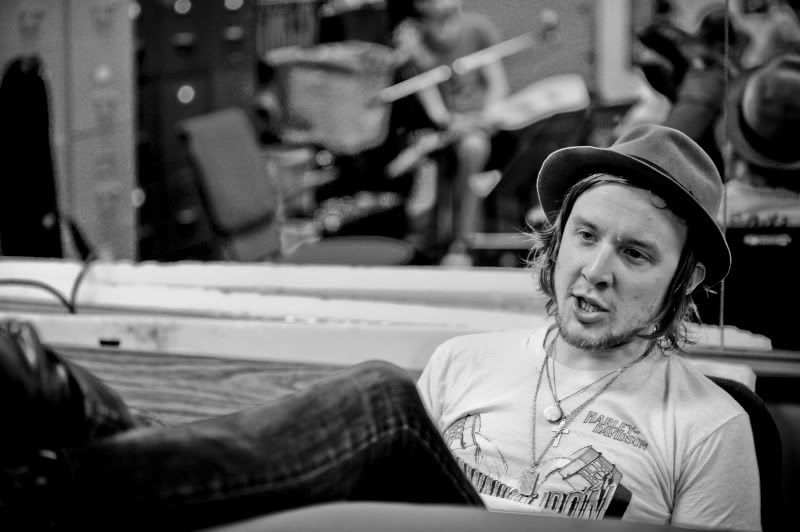
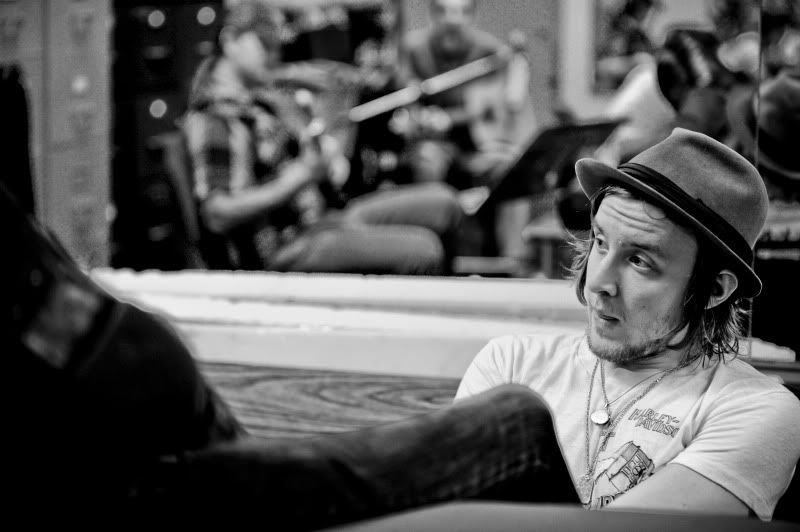
Here are some pics from the evening; at some points you can see the late night taking a hold of us:


This night was meaningful to me because it was the beginning of something I've been wanting to do for a long while. I have been wanting to record music; music that matters beyond me. This means its not about me anymore. It is about an idea, or vision, or value now. This isn't a grand adventure, but it is a communal one. I'm inviting others in because it is for others. This project is for the church - not my ego. This does not make this endeavor holier than any artists work. It makes it different and communal but not better. I hope I make this clear; I remind myself constantly of this.
Special thanks to Mike, Derek, Ben, and Savannah for all staying up, having fun with me, and helping a vision become a reality! Also to Curt Sines, from Artisan Drumworks, who let us record with his 10th Anniversary set made out of a rare Brazilian wood affectionately called "Tiger Wood". The set sounded wonderful!
Here are some pics from the evening; at some points you can see the late night taking a hold of us:









Wednesday, July 22, 2009
Returning to the Booth
I am about to embark on a journey that I have not taken in 6 years. Sunday is the first day of me recording songs I have written. These songs are worship songs, so in a sense, I feel like they are not for me but for the church. The goal in writing worship music is to give the church a song that reflects their faith and soul. These songs are not about my expression, although I do think I am expressing quite a lot. These songs are not for the church's expression. These songs are for a body of believers to come together and sing in unity to and about the One for whom they are gathered.
This is where my approach to this little collection of songs is different. Many times they are plural ("we" and not "I"), and talk about God. Sometimes they are plural and talk to God. Savannah calls my songs "creed-like", and I have heard others agree. These songs are not individualistic because what makes church unique is that its a multitude joining together. These songs, in many ways, are meant to be liturgical - to bring the church together under the unifying attribute of the Gospel. There are times, even in the gathering of believers, to sing one-on-one to God. For me, I see the "market" of worship songs flooded with individualism and I wanted to bring community back into the church gathering. I am not saying individualism is wrong; it is equally needed. I just feel like the scales need to be balanced again, especially in the church.
I have not posted in a while because I have been busy. Out of town, working on songs, finishing up school arrangements, and many more things. I want to bring others into this journey this time around. I will be posting pictures, daily accounts, and hopefully video. I'll be posting lyrics as well to help people have some expectations of what this little project will be. Follow me on twitter, and you'll get up-to-date news. This is not going to be fancy, just simple explanations and accounts of what is happening. I know I am not hugely popular person, and I hope I never will be through this because that is not what this is about. I hope people just enjoy my songs, and want to listen to them because they help them see and commune with God. But whoever wishes to be "in" on this thing is more than welcome too.
Prayers are warranted throughout this whole process.
Cheers!
This is where my approach to this little collection of songs is different. Many times they are plural ("we" and not "I"), and talk about God. Sometimes they are plural and talk to God. Savannah calls my songs "creed-like", and I have heard others agree. These songs are not individualistic because what makes church unique is that its a multitude joining together. These songs, in many ways, are meant to be liturgical - to bring the church together under the unifying attribute of the Gospel. There are times, even in the gathering of believers, to sing one-on-one to God. For me, I see the "market" of worship songs flooded with individualism and I wanted to bring community back into the church gathering. I am not saying individualism is wrong; it is equally needed. I just feel like the scales need to be balanced again, especially in the church.
I have not posted in a while because I have been busy. Out of town, working on songs, finishing up school arrangements, and many more things. I want to bring others into this journey this time around. I will be posting pictures, daily accounts, and hopefully video. I'll be posting lyrics as well to help people have some expectations of what this little project will be. Follow me on twitter, and you'll get up-to-date news. This is not going to be fancy, just simple explanations and accounts of what is happening. I know I am not hugely popular person, and I hope I never will be through this because that is not what this is about. I hope people just enjoy my songs, and want to listen to them because they help them see and commune with God. But whoever wishes to be "in" on this thing is more than welcome too.
Prayers are warranted throughout this whole process.
Cheers!
Tuesday, June 30, 2009
Kingdom or Culture?
For years we have heard Christian leaders talked about a Christian sub-culture. Evangelicals for the past few decades have really invented a new culture to live in. We have our own soccer teams, concerts, coffee shops, bookstores, leaders, and some would say even politicians. We have our own lingo like "pray up" or "plugged in" or "traveling mercies" or "J.C." to name a few. We have our own clothes, and when we cannot be original enough we copy the culture around us with novelty shirts, musical taste, and cultural topics. When the culture gets Apple crazy, we change "iPod" to "iPray". We copy commercials and tv shows to make our own announcements. We have our own culture that is really a sub-culture of the bigger one. We are reactionary, and we are culture makers because of it.
Jesus, throughout his ministry, talked of the Kingdom. It was the subject of numerous parables such as the pearl of great price. Matthew 13 is a great manifesto of metaphors for the Kingdom. Jesus' first words in Mark are "The time is fulfilled, the Kingdom of God is at hand. Repent and believe in the gospel." We are told that the Kingdom of God lives in our hearts. The Kingdom has been established, and is alive.
This juxtaposition of these two, culture and the Kingdom, hit me yesterday. We are so caught up in creating a culture that we have forgotten that we are already in one. Christ has founded His Kingdom and that is the "culture" that we are in. What has happened is the Kingdom has lost its relevance to the world because people have stopped seeing the gospel and salvation as a call to be a part of a culture already established by Christ. We already exist within a culture that tells us how to act, live, and think about things. Whenever we give into culture creating we neglect and diminish the Kingdom that we are already a part of. I think the first church that grabs hold of this idea will be the smallest yet most influential church we have seen in a long time. Once we stop caring about our sub-culture and culture we live in, the more we will find the Kingdom of God to be more than sufficient to give us meaning.
So what are your thoughts? It is needed to address the culture we live in, but do we do so by diminished the kingdom and creating our own reactionary culture?
Jesus, throughout his ministry, talked of the Kingdom. It was the subject of numerous parables such as the pearl of great price. Matthew 13 is a great manifesto of metaphors for the Kingdom. Jesus' first words in Mark are "The time is fulfilled, the Kingdom of God is at hand. Repent and believe in the gospel." We are told that the Kingdom of God lives in our hearts. The Kingdom has been established, and is alive.
This juxtaposition of these two, culture and the Kingdom, hit me yesterday. We are so caught up in creating a culture that we have forgotten that we are already in one. Christ has founded His Kingdom and that is the "culture" that we are in. What has happened is the Kingdom has lost its relevance to the world because people have stopped seeing the gospel and salvation as a call to be a part of a culture already established by Christ. We already exist within a culture that tells us how to act, live, and think about things. Whenever we give into culture creating we neglect and diminish the Kingdom that we are already a part of. I think the first church that grabs hold of this idea will be the smallest yet most influential church we have seen in a long time. Once we stop caring about our sub-culture and culture we live in, the more we will find the Kingdom of God to be more than sufficient to give us meaning.
So what are your thoughts? It is needed to address the culture we live in, but do we do so by diminished the kingdom and creating our own reactionary culture?
Saturday, June 20, 2009
Thoughts for Your Sabbath: Righteousness
And this I pray, that your love may abound still more and more in knowledge and all discernment, that you may approve the things that are excellent, that you may be sincere and without offense till the day of Christ, being filled with the fruits of righteousness, which are by Jesus Christ, to the glory and praise of God." - Philippians 1:9-11
- - - - - - - - - - - - - - - - - - - - - - - - - - - -
This is the last installment of this series in Philippians. We have looked at he essentials of CHristian living: prayer, love, holiness, straightforward living through sincerity, and now we are looking righteousness. Last week, as we finished on straightforward living, we talked about being without offense meaning living in righteousness. The way we do so is to be filled with the fruits of righteousness. Now here, righteousness is concerned with the stance we have before God through Christ's substitutionary sacrifice. "which are by Christ Jesus," is an easy way to see the kind of righteousness Paul is referring to.
In many ways, "fruits of righteousness" is like saying "the fruits of salvation" or even "fruits of the Spirit" because they all point to the same source: God. This is kicker for all who read this as well. This righteousness is given to us; we have not acquired it by our own religious merit. This is the essence of being born again - to have a new nature in which righteousness spring out of our lives like fruit spring out a tree. Its natural! Moreover, Paul is using very similar terminology as he does with Spirit: "Be filled with the Spirit" or "be filled with the fruits of righteousness". It is a daily, even moment-by-moment choice to be filled with these things. They are natural for the Christian to have in their lives, but we all struggle with the unnatural in our lives. Therefore, it is a conscious choice to remember your nature in Christ Jesus, and be slave to the righteousness of Christ.
This is how we live without offense and sincerity; our source is Jesus Himself. His righteousness and new life are the foundation or roots of our lives. We do not need the law, for righteousness itself is in our hearts. The question now is will we live it out.
The last phrase reminds me of Jesus words,
"You are the light of the world. A city on a hill cannot be hidden. Nor do you light a lamp and put it under a basket, but on a stand, and it gives light to all who are in the house. In the same way, let your light shine before men that they may see your good works and glorify your Father who is in heaven."
Our light shining, our righteousness being lived out, brings glory and praise to God. How? This righteousness is not our own but a gift from God. He has transformed us so that any good thing that comes from us is attributed to the grace and majesty of Christ in our lives. ALthough this last phrase is only coupled with the last command (being sincere and without offense), we all know that it is a result of all the things mentioned in this passage. Remember Paul's words today, and bring glory and praise to God through your deeds.
- - - - - - - - - - - - - - - - - - - - - - - - - - - -
This is the last installment of this series in Philippians. We have looked at he essentials of CHristian living: prayer, love, holiness, straightforward living through sincerity, and now we are looking righteousness. Last week, as we finished on straightforward living, we talked about being without offense meaning living in righteousness. The way we do so is to be filled with the fruits of righteousness. Now here, righteousness is concerned with the stance we have before God through Christ's substitutionary sacrifice. "which are by Christ Jesus," is an easy way to see the kind of righteousness Paul is referring to.
In many ways, "fruits of righteousness" is like saying "the fruits of salvation" or even "fruits of the Spirit" because they all point to the same source: God. This is kicker for all who read this as well. This righteousness is given to us; we have not acquired it by our own religious merit. This is the essence of being born again - to have a new nature in which righteousness spring out of our lives like fruit spring out a tree. Its natural! Moreover, Paul is using very similar terminology as he does with Spirit: "Be filled with the Spirit" or "be filled with the fruits of righteousness". It is a daily, even moment-by-moment choice to be filled with these things. They are natural for the Christian to have in their lives, but we all struggle with the unnatural in our lives. Therefore, it is a conscious choice to remember your nature in Christ Jesus, and be slave to the righteousness of Christ.
This is how we live without offense and sincerity; our source is Jesus Himself. His righteousness and new life are the foundation or roots of our lives. We do not need the law, for righteousness itself is in our hearts. The question now is will we live it out.
The last phrase reminds me of Jesus words,
"You are the light of the world. A city on a hill cannot be hidden. Nor do you light a lamp and put it under a basket, but on a stand, and it gives light to all who are in the house. In the same way, let your light shine before men that they may see your good works and glorify your Father who is in heaven."
Our light shining, our righteousness being lived out, brings glory and praise to God. How? This righteousness is not our own but a gift from God. He has transformed us so that any good thing that comes from us is attributed to the grace and majesty of Christ in our lives. ALthough this last phrase is only coupled with the last command (being sincere and without offense), we all know that it is a result of all the things mentioned in this passage. Remember Paul's words today, and bring glory and praise to God through your deeds.
Tuesday, June 16, 2009
Architecture Shots from Downtown
For those of you who do not know, my better half, Savannah, is the creator of Ava Grace Photography. I get the honor of going and shooting with her and editing the majority of the pictures. I'm kind of the right hand man to her and her awesomeness. Whenever we do a shoot I find myself often being more enamored by the backgrounds of our models than the models themselves (and this is hard if not impossible to do with some our amazing models and clients!). The truth is my niche of photography is not portraits. I enjoying doing portraits, but in all honesty, I much rather take pictures of nature, landscapes, or an interesting environment.
So most of the pictures you see on this blog are pictures I randomly snag during a portrait session or a wedding. Here is yet another installment of random pictures I took a couple of weeks ago during an engagement session we did. Cheers!
.jpg)


So most of the pictures you see on this blog are pictures I randomly snag during a portrait session or a wedding. Here is yet another installment of random pictures I took a couple of weeks ago during an engagement session we did. Cheers!
.jpg)


Saturday, June 13, 2009
Thoughts for Your Sabbath: Straightforward Living
And this I pray, that your love may abound still more and more in knowledge and all discernment, that you may approve the things that are excellent, that you may be sincere and without offense till the day of Christ, being filled with the fruits of righteousness, which are by Jesus Christ, to the glory and praise of God." - Philippians 1:9-11
- - - - - - - - - - - - - - - - - - - - - - - - - - - -
Today we focus on what may be the most straightforward part of these prayerful statements by Paul: "that you may be sincere and without offense till the day of Christ." To understand and grasp what Paul is saying here, we need to be clear about what he is not saying. In today's world, the words "sincere" and "without offense" could take on different meanings than what Paul was trying to communicate.
Sincerity today is equal to being "real". To be real is to have a raw openness of both depravity and holiness in our lives. It does not take into account what is best for the ones being exposed to your realness; it is too concerned with being completely open about who we are that it looses any sensitivity to how it will effect our fellow man or God. It ends up being a selfish intention. I am not saying we should not open up to our fellow men about our failures and struggles. I mean that as we do open up, we do so to mend our severed relationships and to confess our depravity. What I have found in my generation is that to be real means to merely show all sides of ourselves unashamedly - there is no confession or repentance. This is a great disaster and insult to our fellow man.
"Without offense" could be easily confused with what we call today as "tolerance". Tolerance, today, means not just to respect others beliefs but to affirm others' beliefs as true as if someone believing something validates it as true (Hitler would love our era). This is not what Paul is referring to here. Nor is Paul trying to say to never be on someone's bad side. We all know that you can be on someone's bad side for being loving and caring. Paul is talking about something much more straightforward here.
Paul's words her may be too straightforward for some of us to grasp. Sincerity merely means to live without falsehood towards God and man. As Jesus said, "Let your 'yes' be 'yes' and your 'no' be 'no.'" Moreover, at the heart of living sincerely is the requirement to treat others as they should be treated. Meaning that we esteem our neighbor and God because to be sincere means to live in truth. As we said above, it does not mean to live openly without shame, but to live honestly in truth.
In the same way, "without offense" means just that. We are to live in righteousness. To live as we should so that no one can take offense to us. If we have committed wrongdoing we are to become peacemakers and ask for forgiveness. But I must repeat, this is not living in a vacuum where the highest law is to not offend anyone. To be without offense, is to have no moral grounds against you. Paul is talking about when we offend the humanity of our neighbor - not the depravity of our neighbor. Therefore, we live in righteousness in order to live without offense before God and man. If man is take offense of you, let it only be because who have been in the right and not in the wrong.
This is straightforward living: to live in sincerity and without offense before God and man. It is possibly to simple for us to grasp and live out. The simple truths are the hardest ones to accept and live with many times. So today and this week let us live straightforward with our neighbors and God. Let us be sincere in word and deed and without offense in our relationships. If you are in wrong with someone, make it right. If you have lived insincerely with someone start living honestly with them. In all things let us not celebrate or accept our depravity this week but rejoice in our humanity and the redemption God has given us.
- - - - - - - - - - - - - - - - - - - - - - - - - - - -
Today we focus on what may be the most straightforward part of these prayerful statements by Paul: "that you may be sincere and without offense till the day of Christ." To understand and grasp what Paul is saying here, we need to be clear about what he is not saying. In today's world, the words "sincere" and "without offense" could take on different meanings than what Paul was trying to communicate.
Sincerity today is equal to being "real". To be real is to have a raw openness of both depravity and holiness in our lives. It does not take into account what is best for the ones being exposed to your realness; it is too concerned with being completely open about who we are that it looses any sensitivity to how it will effect our fellow man or God. It ends up being a selfish intention. I am not saying we should not open up to our fellow men about our failures and struggles. I mean that as we do open up, we do so to mend our severed relationships and to confess our depravity. What I have found in my generation is that to be real means to merely show all sides of ourselves unashamedly - there is no confession or repentance. This is a great disaster and insult to our fellow man.
"Without offense" could be easily confused with what we call today as "tolerance". Tolerance, today, means not just to respect others beliefs but to affirm others' beliefs as true as if someone believing something validates it as true (Hitler would love our era). This is not what Paul is referring to here. Nor is Paul trying to say to never be on someone's bad side. We all know that you can be on someone's bad side for being loving and caring. Paul is talking about something much more straightforward here.
Paul's words her may be too straightforward for some of us to grasp. Sincerity merely means to live without falsehood towards God and man. As Jesus said, "Let your 'yes' be 'yes' and your 'no' be 'no.'" Moreover, at the heart of living sincerely is the requirement to treat others as they should be treated. Meaning that we esteem our neighbor and God because to be sincere means to live in truth. As we said above, it does not mean to live openly without shame, but to live honestly in truth.
In the same way, "without offense" means just that. We are to live in righteousness. To live as we should so that no one can take offense to us. If we have committed wrongdoing we are to become peacemakers and ask for forgiveness. But I must repeat, this is not living in a vacuum where the highest law is to not offend anyone. To be without offense, is to have no moral grounds against you. Paul is talking about when we offend the humanity of our neighbor - not the depravity of our neighbor. Therefore, we live in righteousness in order to live without offense before God and man. If man is take offense of you, let it only be because who have been in the right and not in the wrong.
This is straightforward living: to live in sincerity and without offense before God and man. It is possibly to simple for us to grasp and live out. The simple truths are the hardest ones to accept and live with many times. So today and this week let us live straightforward with our neighbors and God. Let us be sincere in word and deed and without offense in our relationships. If you are in wrong with someone, make it right. If you have lived insincerely with someone start living honestly with them. In all things let us not celebrate or accept our depravity this week but rejoice in our humanity and the redemption God has given us.
Saturday, June 06, 2009
Thoughts for Your Sabbath: How to Live in Excellence
And this I pray, that your love may abound still more and more in knowledge and all discernment, that you may approve the things that are excellent, that you may be sincere and without offense till the day of Christ, being filled with the fruits of righteousness, which are by Jesus Christ, to the glory and praise of God." - Philippians 1:9-11
- - - - - - - - - - - - - - - - - - - - - - - - - - - - - - - -
Paul so far has talked to the church at Philippi about loving God and others by knowing God intimately and by keeping your neighbor in high esteem in order to act honorably and wisely before them. Now he continues his thought by saying that they need to "approve the things that are excellent" (Phil. 1:10). A short look at commentaries let us know that people have slightly different ideas of what this means, but they all agree on what is excellent: truth.
I think that the commentators are making an accurate inference too. Since Paul has already talked about Christian wisdom, it fits that from there he moves to "approving" or using the wisdom we have obtained to know what is excellent. However, I think it is prudent to add that approving what is excellent falls into action as well. Paul was never one to leave it an contemplation - he always brought action into the scenario. So with this in mind, let us take a look closer at what is excellent.
What is excellent is what is true and holy. We, as Christians, are never concerned with merely ideas that are true. We are concerned with ideas that are true and the sacred stuff that makes up that idea. For instance, we must never speak out against homosexuality by merely citing the truth of sexual relationships. We must also touch the holiness of the issue - the sacredness of sex and, of equal importance, the sacredness of the individual. While these are truths within themselves, they are much more than a mere truth like ice is frozen water. There is a much heavier atmosphere within the truth that can only be explained as sacred or holy.
Therefore Paul is admonishing the church at Phillippi and the church today to seek out, find, and approve all things that are true and holy. It is a call to study; it is a call to Godly living (how else can you approve such things unless you try them?). Before we close though, I want to touch on truth for one more moment. Remember Jesus' words: "That you may know the truth and the truth shall set you free"? Let us never forget the words before this either: "If you hold to my teaching than you are really my disciples" (John 8:31-32). We approve the teaching and truth of God, the things that are excellent, for a much greater purpose: to be free. As my friend, Dale Fincher, points out: "Truth is a means to the end of freedom." We must never stop at truth in our lives. We must realize that the truth offers freedom to ourselves and others.
Today, let us seek and approve the things that are excellent in order to live in the freedom of Christ. This is the goal at which Paul is really pointing to in this passage.
- - - - - - - - - - - - - - - - - - - - - - - - - - - - - - - -
Paul so far has talked to the church at Philippi about loving God and others by knowing God intimately and by keeping your neighbor in high esteem in order to act honorably and wisely before them. Now he continues his thought by saying that they need to "approve the things that are excellent" (Phil. 1:10). A short look at commentaries let us know that people have slightly different ideas of what this means, but they all agree on what is excellent: truth.
I think that the commentators are making an accurate inference too. Since Paul has already talked about Christian wisdom, it fits that from there he moves to "approving" or using the wisdom we have obtained to know what is excellent. However, I think it is prudent to add that approving what is excellent falls into action as well. Paul was never one to leave it an contemplation - he always brought action into the scenario. So with this in mind, let us take a look closer at what is excellent.
What is excellent is what is true and holy. We, as Christians, are never concerned with merely ideas that are true. We are concerned with ideas that are true and the sacred stuff that makes up that idea. For instance, we must never speak out against homosexuality by merely citing the truth of sexual relationships. We must also touch the holiness of the issue - the sacredness of sex and, of equal importance, the sacredness of the individual. While these are truths within themselves, they are much more than a mere truth like ice is frozen water. There is a much heavier atmosphere within the truth that can only be explained as sacred or holy.
Therefore Paul is admonishing the church at Phillippi and the church today to seek out, find, and approve all things that are true and holy. It is a call to study; it is a call to Godly living (how else can you approve such things unless you try them?). Before we close though, I want to touch on truth for one more moment. Remember Jesus' words: "That you may know the truth and the truth shall set you free"? Let us never forget the words before this either: "If you hold to my teaching than you are really my disciples" (John 8:31-32). We approve the teaching and truth of God, the things that are excellent, for a much greater purpose: to be free. As my friend, Dale Fincher, points out: "Truth is a means to the end of freedom." We must never stop at truth in our lives. We must realize that the truth offers freedom to ourselves and others.
Today, let us seek and approve the things that are excellent in order to live in the freedom of Christ. This is the goal at which Paul is really pointing to in this passage.
Monday, June 01, 2009
.jpg)

Saturday, May 30, 2009
Thoughts for Your Sabbath: Love Guided
"And this I pray, that your love may abound still more and more in knowledge and all discernment, that you may approve the things that are excellent, that you may be sincere and without offense till the day of Christ, being filled with the fruits of righteousness, which are by Jesus Christ, to the glory and praise of God." - Philippians 1:9-11
- - - - - - - - - - - - - - - -
". . .that your love may abound still more and more in knowledge and all discernment. . ."
Paul does not go into detail here about what love is - he skips straight to the practicality of love. However, I think it may be beneficial to quickly talk about love. I have been reading Simone Weil, the Christian Mystic, and while her ideas are hit and miss with orthodoxy, it is nonetheless challenging to our apathy towards orthodoxy (in a good and bad way). Two thoughts of love by her come into mind in this verse.
Firstly, Weil talks of the love of God: "Love of God is pure when joy and suffering inspire an equal degree of gratitude." The radical extremes that this quote gives us reminds me of Job. Job was profound not because God gets away with whatever because He is so big and Job is so small. When Job says, "You give and take away/ Blessed be the name of the Lord," He is saying much more than this simple induction of the trumping nature of God's Sovereignty and power. Job's love for God, in many ways, was intimate. God's love had rubbed off on Job's ideas of love. Job for once was selfless, knowing that God's love was where his justice and comfort was found.
Secondly, Weil talks of our love for others: "Belief in the existence of other human beings as such is love." In this perspective, we realize what love for others is about - the esteeming of the other. We love our neighbors as ourselves not only because it redeems and satisfies our human nature itself but also because it redeems and esteems the humanity in every individual. With these two quotes in mind, let us move to the practicality of Paul's teaching on love here.
Knowledge and discernment, in this excerpt above, are the guides and filters of our love in practice. First, knowledge here is concerned with our knowledge of God; specifically an intimate knowledge of God. The second, discernment, is concerned with wisdom in our social situations. Just as Jesus asks us to always keep our souls towards love of God and others (Matt. 22), and John teaches us that loving God and neighbor are not mutually exclusive (1 John 4), and Amos tells us that seeking God calls for righteousness in our dealings with our fellow man (Amos 5), so does Paul ask us to keep God and neighbor in focus with our love.
In specifics, this part is extremely practical for your sabbath. Our love is to be guided and filtered through our intimate knowledge of God (things you know by time spent with the person and not by reading their bio). Knowing God's character, desires, and law intimately makes our daily lives quite sensitive to living righteously. Moreover, our love needs to continually be on discernment. How we act in a certain situation depends greatly on how our selfless love has grown in wisdom. It would be really hard to act inappropriately in public if we realize that the people we are dealing with our human beings as such. Utility has little room in such a circumstance. But also, we realize that the safest action in a situation is usually the selfless act. When we are around others we are dealing with souls that can be injured or uplifted. Our love guided by our discernment, will help us greatly in uplifting souls only.
Today, in our Sabbaths, we need to refocus our love towards God and others by knowing God intimately and using discernment in our dealings with others. Let us find our love abounding today because of our continually desire to know God more and esteem our neighbor with even higher honor.
- - - - - - - - - - - - - - - -
". . .that your love may abound still more and more in knowledge and all discernment. . ."
Paul does not go into detail here about what love is - he skips straight to the practicality of love. However, I think it may be beneficial to quickly talk about love. I have been reading Simone Weil, the Christian Mystic, and while her ideas are hit and miss with orthodoxy, it is nonetheless challenging to our apathy towards orthodoxy (in a good and bad way). Two thoughts of love by her come into mind in this verse.
Firstly, Weil talks of the love of God: "Love of God is pure when joy and suffering inspire an equal degree of gratitude." The radical extremes that this quote gives us reminds me of Job. Job was profound not because God gets away with whatever because He is so big and Job is so small. When Job says, "You give and take away/ Blessed be the name of the Lord," He is saying much more than this simple induction of the trumping nature of God's Sovereignty and power. Job's love for God, in many ways, was intimate. God's love had rubbed off on Job's ideas of love. Job for once was selfless, knowing that God's love was where his justice and comfort was found.
Secondly, Weil talks of our love for others: "Belief in the existence of other human beings as such is love." In this perspective, we realize what love for others is about - the esteeming of the other. We love our neighbors as ourselves not only because it redeems and satisfies our human nature itself but also because it redeems and esteems the humanity in every individual. With these two quotes in mind, let us move to the practicality of Paul's teaching on love here.
Knowledge and discernment, in this excerpt above, are the guides and filters of our love in practice. First, knowledge here is concerned with our knowledge of God; specifically an intimate knowledge of God. The second, discernment, is concerned with wisdom in our social situations. Just as Jesus asks us to always keep our souls towards love of God and others (Matt. 22), and John teaches us that loving God and neighbor are not mutually exclusive (1 John 4), and Amos tells us that seeking God calls for righteousness in our dealings with our fellow man (Amos 5), so does Paul ask us to keep God and neighbor in focus with our love.
In specifics, this part is extremely practical for your sabbath. Our love is to be guided and filtered through our intimate knowledge of God (things you know by time spent with the person and not by reading their bio). Knowing God's character, desires, and law intimately makes our daily lives quite sensitive to living righteously. Moreover, our love needs to continually be on discernment. How we act in a certain situation depends greatly on how our selfless love has grown in wisdom. It would be really hard to act inappropriately in public if we realize that the people we are dealing with our human beings as such. Utility has little room in such a circumstance. But also, we realize that the safest action in a situation is usually the selfless act. When we are around others we are dealing with souls that can be injured or uplifted. Our love guided by our discernment, will help us greatly in uplifting souls only.
Today, in our Sabbaths, we need to refocus our love towards God and others by knowing God intimately and using discernment in our dealings with others. Let us find our love abounding today because of our continually desire to know God more and esteem our neighbor with even higher honor.
Saturday, May 23, 2009
Thoughts for Your Sabbath: Prayer
"Prayer may not save us, but prayer makes us worth saving."
"Prayer is our humble answer to the inconceivable surprise of living. It is all we can offer in return for the mystery by which we live."
"The focus of prayer is not the self. . . It is the momentary disregard of our concerns, the absence of self-cetnered thoughts, which constitute the art of prayer. . . Thus, in beseeching Him for bread, there is one instant, at least, in which our mind is directed neither to our hunger nor to food, but to His mercy. This instant is prayer."
- Abraham Heschel on Prayer
The Sabbath for a Christian is a time of ceasing for the body and rest for the soul. It is a time for us to focus on our holiness. With this in mind, I thought it would be prudent to focus on what the early church held as holiness. In the beginning of Paul's letter to the church in Philipi, he offers up a prayer:
"And this I pray, that your love may abound still more and more in knowledge and all discernment, that you may approve the things that are excellent, that you may be sincere and without offense till the day of Christ, being filled with the fruits of righteousness, which are by Jesus Christ, to the glory and praise of God." - Philippians 1:9-11
The next five saturdays will be a series on these three verses. There are three main statements made that each start with the word "that". We will look at each one a week starting next week. This week, I wanted to focus on the very first phrase that may have stronger implications than we realize.
"And this I pray..."
What is prayer to Paul? Later in Philippians he makes a very important statement. "Be anxious for nothing, but in everything by prayer and supplication with thanksgiving let your requests be made known to God." Prayer AND supplication. The word for supplication here means asking and even begging for something. Notice this act is coupled from prayer but not the same. Prayer, in its essence, is a time of communion. In this communion, we offer up praise, thanksgiving, and requests as well as frustrations, agonies, pains, joys, love, and our neighbors. I am convinced that prayer would be much more powerful if we focused less on ourselves and more on others. Therefore, prayer is not telling God what He already knows you need. Prayer is offering up to God, as Lord, your very soul.
What does prayer look like? Jesus, in Matthew six, gave very different instructions to prayer than we are used to:
1. We are to pray in solitude (Matt. 6:6). Jesus Himself went to the mountain sides, wilderness, and pretty much any place he could find at early hours to ensure He was alone. He teaches this for focus (the Father is unseen), but also metaphorically to help us remember that prayer is an intimate act between you and God when each other's logos and pathos is poured out.
2. Prayer should be to the point and not filled up with words (Matt. 6:7). Being to the point produces sincerity in our words and hearts. Also prayer is not to be filled with words because our words are not near as important as His word.
3. We are to have the same focus on prayer as the Model Prayer shows us. We acknowledge God's presence and ask for his kingdom to be manifested in our own lives daily; we may ask for much but trust His character on what is essential (i.e. sustenance); we concern ourselves with our neighbor and our sins against our neighbor and God; and finally we ask for God's continual presence and guidance throughout our day.
This quick look at Jesus' teaching helps us refocus today as we pray. We can take his very simple guidance and turn it into a revolutionary instant in our day. The result of prayer and supplication, Paul says, is the peace of God. And that is true rest for the soul. In closing I want to offer up one more quote from Heschel that may refresh our senses on what prayer really does.
"The true motivation for prayer is not, as it has been said, the sense of being at home in the universe, but rather the sense of not being home in the universe. . . That experience gains intensity in the amazing awareness that God himself is not at home in the universe. He is not at home in the universe where His will is defied and where His kingship is denied. God is in exile; the world is corrupt. The universe itself is not at home. To pray means to bring God back into the world, to establish His kingship for a second at least. To pray means to expand His presence."
"Prayer is our humble answer to the inconceivable surprise of living. It is all we can offer in return for the mystery by which we live."
"The focus of prayer is not the self. . . It is the momentary disregard of our concerns, the absence of self-cetnered thoughts, which constitute the art of prayer. . . Thus, in beseeching Him for bread, there is one instant, at least, in which our mind is directed neither to our hunger nor to food, but to His mercy. This instant is prayer."
- Abraham Heschel on Prayer
The Sabbath for a Christian is a time of ceasing for the body and rest for the soul. It is a time for us to focus on our holiness. With this in mind, I thought it would be prudent to focus on what the early church held as holiness. In the beginning of Paul's letter to the church in Philipi, he offers up a prayer:
"And this I pray, that your love may abound still more and more in knowledge and all discernment, that you may approve the things that are excellent, that you may be sincere and without offense till the day of Christ, being filled with the fruits of righteousness, which are by Jesus Christ, to the glory and praise of God." - Philippians 1:9-11
The next five saturdays will be a series on these three verses. There are three main statements made that each start with the word "that". We will look at each one a week starting next week. This week, I wanted to focus on the very first phrase that may have stronger implications than we realize.
"And this I pray..."
What is prayer to Paul? Later in Philippians he makes a very important statement. "Be anxious for nothing, but in everything by prayer and supplication with thanksgiving let your requests be made known to God." Prayer AND supplication. The word for supplication here means asking and even begging for something. Notice this act is coupled from prayer but not the same. Prayer, in its essence, is a time of communion. In this communion, we offer up praise, thanksgiving, and requests as well as frustrations, agonies, pains, joys, love, and our neighbors. I am convinced that prayer would be much more powerful if we focused less on ourselves and more on others. Therefore, prayer is not telling God what He already knows you need. Prayer is offering up to God, as Lord, your very soul.
What does prayer look like? Jesus, in Matthew six, gave very different instructions to prayer than we are used to:
1. We are to pray in solitude (Matt. 6:6). Jesus Himself went to the mountain sides, wilderness, and pretty much any place he could find at early hours to ensure He was alone. He teaches this for focus (the Father is unseen), but also metaphorically to help us remember that prayer is an intimate act between you and God when each other's logos and pathos is poured out.
2. Prayer should be to the point and not filled up with words (Matt. 6:7). Being to the point produces sincerity in our words and hearts. Also prayer is not to be filled with words because our words are not near as important as His word.
3. We are to have the same focus on prayer as the Model Prayer shows us. We acknowledge God's presence and ask for his kingdom to be manifested in our own lives daily; we may ask for much but trust His character on what is essential (i.e. sustenance); we concern ourselves with our neighbor and our sins against our neighbor and God; and finally we ask for God's continual presence and guidance throughout our day.
This quick look at Jesus' teaching helps us refocus today as we pray. We can take his very simple guidance and turn it into a revolutionary instant in our day. The result of prayer and supplication, Paul says, is the peace of God. And that is true rest for the soul. In closing I want to offer up one more quote from Heschel that may refresh our senses on what prayer really does.
"The true motivation for prayer is not, as it has been said, the sense of being at home in the universe, but rather the sense of not being home in the universe. . . That experience gains intensity in the amazing awareness that God himself is not at home in the universe. He is not at home in the universe where His will is defied and where His kingship is denied. God is in exile; the world is corrupt. The universe itself is not at home. To pray means to bring God back into the world, to establish His kingship for a second at least. To pray means to expand His presence."